
Of course rest feels unsafe.
And of course unfinished things feel like a personal failure.
If you’ve been doing all the freaking things—keeping everyone alive, “staying on top of it,” checking boxes like it’s your job—but still feel empty, snappy, disconnected, or weirdly numb… you’re not alone.
Here’s the uncomfortable truth we don’t say out loud often enough:
A lot of us aren’t chasing productivity.
We’re chasing permission to feel okay.
When Productivity Becomes a Stand-In for Worth
Most of us were never taught this explicitly, but we learned it anyway:
Being productive meant being good.
Being efficient meant being responsible.
Being busy meant being valuable.
Being efficient meant being responsible.
Being busy meant being valuable.
And if you’re a mom, a cycle-breaker, someone with ADHD/executive dysfunction, or someone who learned early that being “easy” or “helpful” kept the peace—this makes even more sense.
Because for a lot of us, the old system was:
Perform → get praise/safety/attention.
Slow down → get criticism, coldness, or the emotional version of a door slammed in your face.
Slow down → get criticism, coldness, or the emotional version of a door slammed in your face.
So now… not finishing the thing doesn’t just feel annoying.
It feels like a personal attack.
Like: I dropped the ball. I’m failing. Why can’t I get it together?
But here’s the key line:
You don’t feel bad because the task isn’t done.
You feel bad because somewhere along the line, your value got tied to completion.
You feel bad because somewhere along the line, your value got tied to completion.
That’s not a “planner” problem.
That’s a nervous system + worth story.
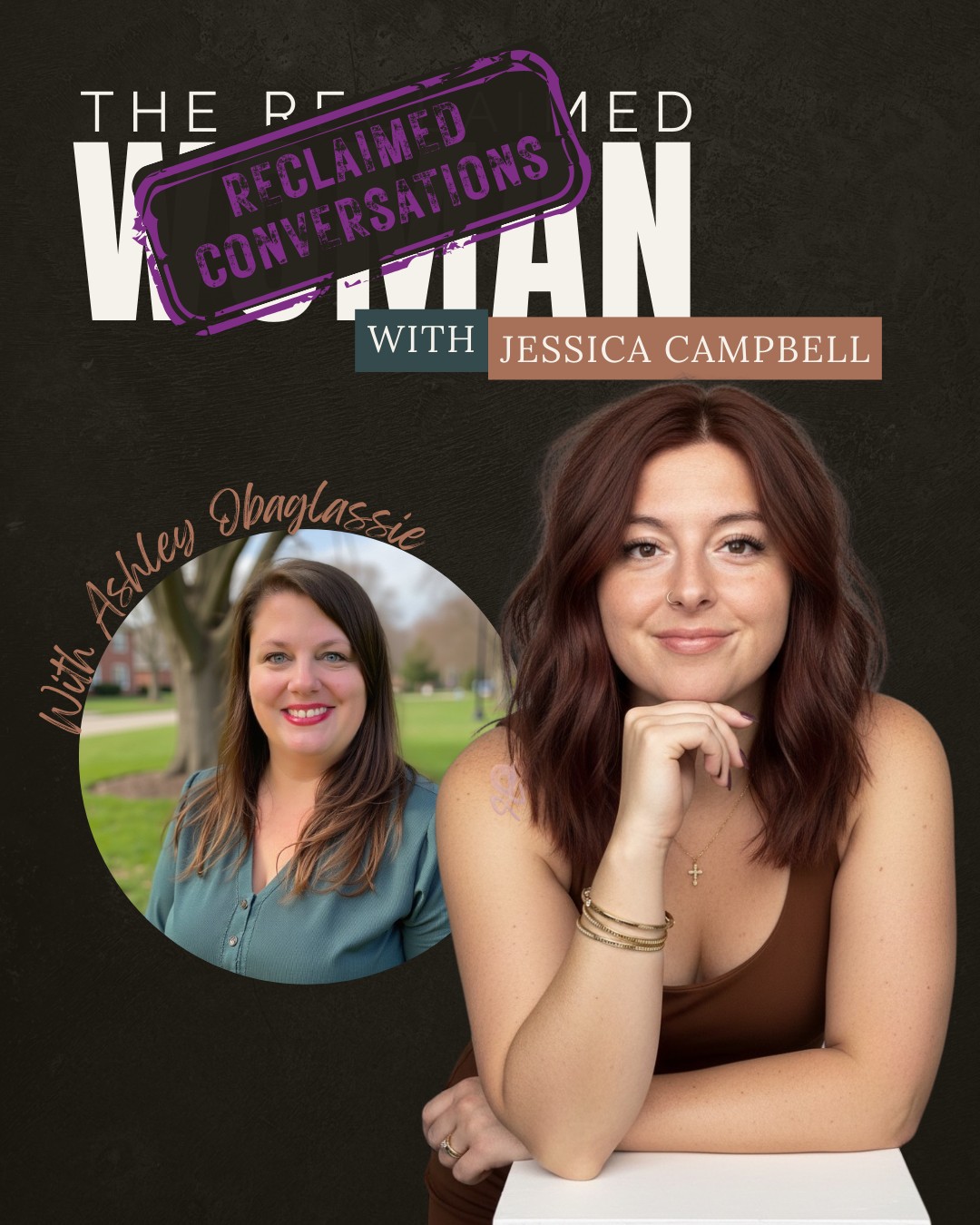
Apple Podcasts | Spotify | iHeart
Why “Just Try Harder” Makes It Worse
If you have ADHD or executive dysfunction, this hits extra hard because effort doesn’t always equal output.
You can try so hard.
You can buy the color-coded planner. You can set the alarms. You can do the “morning routine.” You can stare at the mess and internally scream at yourself…
…and still not be able to do the thing.
Which is why worth-based productivity is freaking brutal.
Because it turns a hard day into a character assassination.
Connection Is the Antidote (Not Another Thing to Do)
Let me say this cleanly:
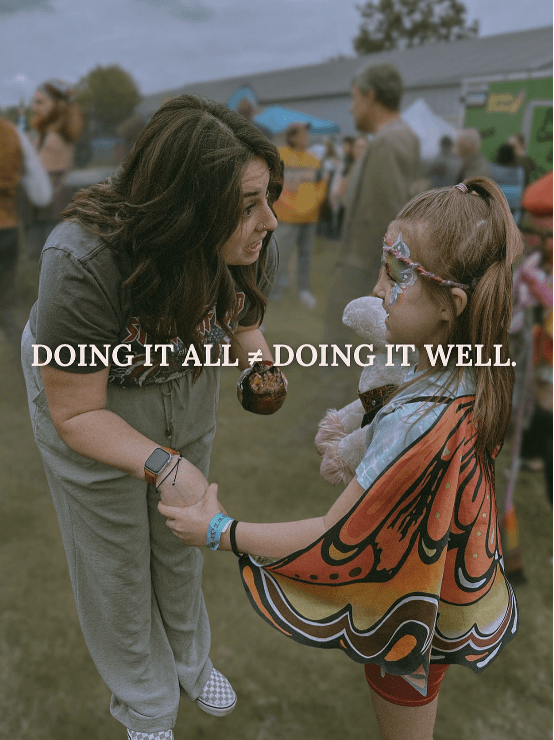
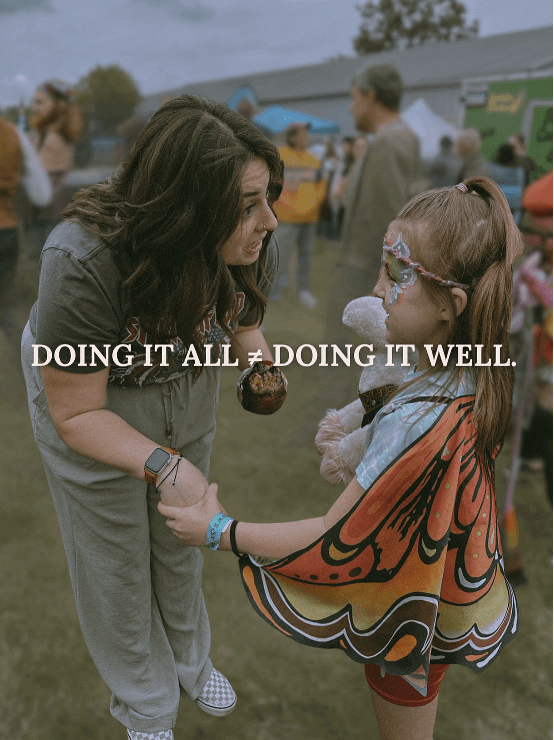
Your worth does not fluctuate with your productivity. Period.
And connection is the antidote to worth-based productivity because it tells your nervous system something productivity never can:
Doing less does not make you less.
You don’t have to perform to be allowed to take up space.
Pausing doesn’t erase you or put you at risk.
Connection fills the place that productivity was trying to earn.
So yeah—connection is the new productivity.
Not because your to-do list doesn’t matter.
But because your capacity matters, and connection protects that capacity.
“But Jess… If I Stop Caring About Productivity, Everything Will Fall Apart.”
I know. Same.
For a lot of us, productivity has been a safety strategy. If you’re the one who holds it all together, letting go can feel like the whole house will collapse.
But connection doesn’t mean you stop doing the things.
It means you stop using productivity to decide when you’re allowed to feel okay.
You can still want to finish things.
You just don’t have to earn your worth by doing them.
A Real-Life Moment: “Crushing It” While Disappearing
I’ve had plenty of seasons where, on paper, I looked like I was crushing it… but I felt distant and checked out.
One of the clearest examples was the last job I had as a full-time W-2 employee.
It started part-time, then quickly turned into full-time, then salary, and suddenly I was living in survival mode. I was basically hidden in my office all the time, barely eating, feeding my kids quickly and rushing back to my desk. My door was open, but I wasn’t available.
And I was snappy. Mean. Burnt out. Depressed. Postpartum and hormonal on top of it all.
What I needed was to back off.
Instead, I disconnected. And everything got harder.
That’s why I mean this literally when I say connection is the new productivity:
The ability to create and sustain connection directly affects your capacity to show up everywhere else.
Connection Has to Exist in Three Places (Or You’ll Keep Feeling “Behind”)
Let’s break connection down into three places it has to exist, or you’re going to keep feeling like you’re falling behind:
Connection to yourself. If you constantly override your needs, resentment will build.
Connection at home. If home feels tense and heavy, it’s hard to feel okay in your body.
Connection to community. If you do everything alone long enough, it will cost you.
Connection at home. If home feels tense and heavy, it’s hard to feel okay in your body.
Connection to community. If you do everything alone long enough, it will cost you.
So let’s make it practical.
Not “move to the woods and start making sourdough from scratch” practical.
Real life practical.
5 Ways to Make Connection Your New Productivity System
1) The Two-Minute Return (Connection to You)
This is for the mom who cannot take a bubble bath, meditate for 30 minutes, and drink water out of a glass cup twice a day.
Where are my ladies at? (Hi. It’s me.)
Twice a day, ask:
Where am I holding tension?
What do I need in the next 10 minutes?
Then do one tiny step.
Relax your shoulders. Unclench your jaw. Step outside for 60 seconds. Put your hand on your chest and say, “I’m here. I’m good.”
This counts as productivity because it protects your capacity to function.
It’s a ripple effect.
2) The Micro-Moment Rule (Connection at Home)
We think connection requires a big date night or a perfect family day.
Thank God that’s not true, because life is chaos.
Connection is built in micro moments: eye contact, softening your tone, a hand on the shoulder, a joke, a tiny moment of “tell me more.”
Pick one little moment each day—like 10 minutes of undistracted presence. No phones. No multitasking. Just you and them.
You can do a quick walk. A “high-low” at dinner. Or one open-ended bedtime question you actually listen to.
This isn’t about being the “perfect connected mom.”
It’s about building safety back into your relationships in tiny, doable ways.
3) Separate the Task From Your Worth (Because This One Is Huge)
Try this line:
“This task is unfinished. I’m not.”
No pep talk. No mindset gymnastics. No fixing yourself.
Just a clean line between the task and your value.
Because if the unfinished thing is just an unfinished thing, it stops being “evidence” about you.
4) Let Connection Count as “Done”
Most of us end the day asking:
What did I get done? What did I finish? What did I accomplish?
Try swapping that for:
Where did I stay connected today?
Did you soften your voice with your kid?
Did you notice your body instead of bulldozing through?
Did you tell the truth instead of performing?
Did you stay present instead of disappearing into scrolling?
All of that counts.
Even if the list didn’t move.
Connection is not “extra credit.” It’s… the whole point of being human.
5) Repair Instead of Punish (AKA: Stop Using Shame as a Life Coach)
When productivity slips—and it will—notice your reflex.
For a lot of us, it’s punishment: guilt, pressure, “tomorrow I’ll try harder.”
But punishment doesn’t give you capacity.
Repair does.
Here’s a simple repair framework (with your kid or your partner):
- Name it: “Things got intense.”
- Own it: “I didn’t like how I talked to you. I’m sorry.”
- Reconnect: “Can we restart? Do you want a hug or space?”
Repair prevents “emotional debt”—that lingering tension that drains your focus, patience, creativity, and joy.
Also: repairing doesn’t mean you “lowered the bar.”
It means you stabilized your system so you can keep going without running on fumes and rage-cleaning at 11pm.
Bonus: Build Slow Connection on Purpose (Community, Without Overwhelm)
Sometimes connection is a dramatic heart-to-heart.
And sometimes it’s literally being in the same room while you both scroll, because closeness matters even when you’re tapped out.
And sometimes the way back to yourself and your people is… slow.
A voice note to a friend once a week.
A real text that isn’t “lol same.”
A postcard.
A note you keep in a drawer and send when you think of someone.
This is how you rebuild community without overwhelming your schedule: in pockets of time, on purpose.
And if connection is “extra,” it will disappear.
So make it a system. Put it on the calendar like it’s a meeting—because it is.
Because what you protect becomes your life.
“Okay But Connection Feels Hard.”
Two common reasons:
- You’re already overstimulated, and your nervous system is like, Absolutely not, I cannot handle one more input. Start with self-connection first—two minutes—and build outward.
- You’ve been the strong one for so long that vulnerability feels risky. But healing often looks like letting yourself be seen in small ways: “I miss you.” “I’m not okay.” “Can you sit with me for a minute?”
That’s not weakness.
That’s leadership.
Your 7-Day Challenge (Simple, Not Easy)
Pick one connection practice and do it for seven days:
- Two-minute return
- Micro-moment rule
- Repair when you snap
- Slow connection (one intentional reach-out)
- Protected time on the calendar
Not five. Not “a whole new personality.”
One.
And if you miss a day? You don’t restart your life from scratch.
You pick back up where you left off.
Because you’re not behind. You’re not broken.
You’re a human being.
And that’s not a productivity problem—it’s a worth story, and it’s ready to be rewritten.
Quick, Gentle Disclaimer
This is educational and supportive, not therapy. If you’re dealing with deep trauma responses, panic, or shutdown that’s making daily life feel impossible, you deserve real support (and you’re not “too much” for needing it).
Want a tiny “save it on your phone” tool?
If you want, text the word CONNECT to 641.329.3912and I’ll send you a “connection over productivity” mini checklist you can keep on your phone (and there’s also a trigger-tracking playbook if you’re like, “Cool cool cool, I’d love connection… but I’m also constantly activated”).
Connect With Me:
- Subscribe
- Follow @bestjesscampbell
- Loop Earplugs (commissionable link)
- The Repeat Triggers Playbook






























0 Comments